

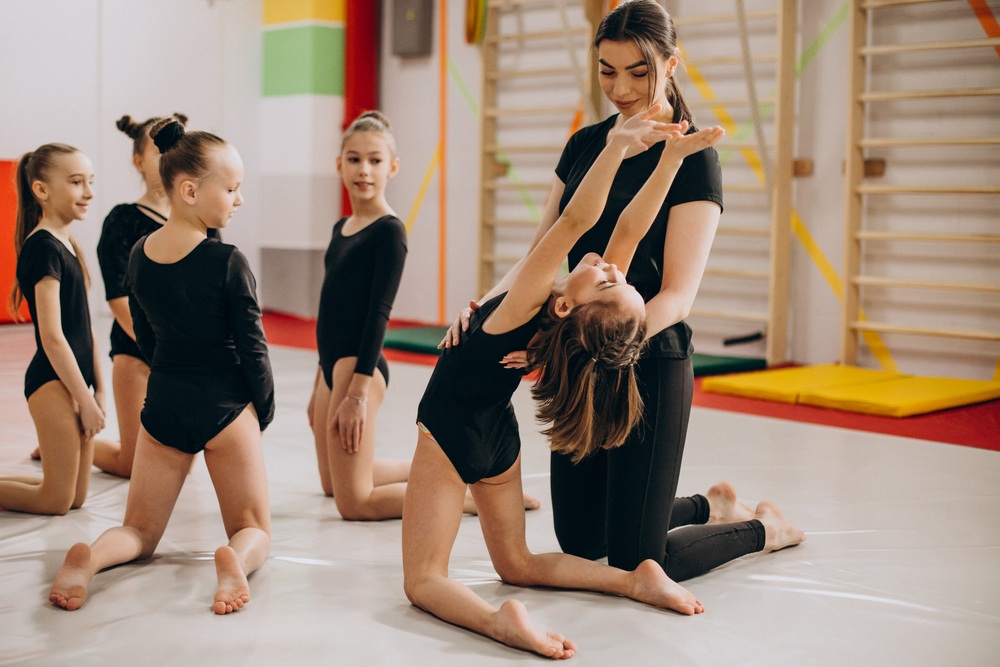
Tumbling has a little something for everyone, from the first-timer figuring out a forward roll to the cheerleader chasing their next big skill. The mat is full of challenges worth getting excited about, and at Gymnastics of San Antonio, every class is built to help students meet them. Here is a look at the core tumbling moves you will learn from our gymnastics programs and what that training does for you in the long run.
Core Tumbling Skills
Tumbling covers a lot of ground, and every skill builds on the last. These are the core moves students work through in class, each one setting the stage for what comes next.
Forward and Backward Roll
Every tumbling journey starts on the ground. Forward and backward rolls teach gymnasts how to move their bodies through space with control, protecting their head and neck in the process. These early skills develop spatial awareness and introduce the idea of momentum, which carries through nearly every advanced skill a gymnast will eventually learn.
Handstand
Ask any gymnastics coach what skill matters most, and the handstand comes up every time. Holding a strong, straight handstand requires gymnasts to find balance, build shoulder strength, and align their entire body from fingertips to toes. Time spent perfecting it pays off across events and skill levels, making it a staple of any well-rounded tumbling program.
Cartwheel
Few skills match the thrill of moving sideways through a full rotation for the first time. The cartwheel introduces weight transfer from feet to hands and back again, building the lateral strength and coordination that more advanced tumbling depends on. A clean, controlled cartwheel is something coaches look for before moving students to more demanding progressions.
Bridge
Spinal flexibility and back strength sit at the heart of the bridge, and both become increasingly important as gymnasts progress. The skill also teaches gymnasts to open their shoulders and push through their arms, which translates directly into back walkovers, back handsprings, and other skills requiring a strong, flexible arch.
How Mastering Tumbling in Gymnastics Pays Off
Learning the moves is only part of the picture. The real benefits of tumbling training show up in how gymnasts develop as athletes over time.
Conditioning
Every tumbling and gymnastics skill engages the core, the upper body, and the legs, often all at once. Regular practice builds functional strength that supports not just gymnastics performance but overall athletic development.
Consistency
Progress in gymnastics comes from showing up and repeating skills until they become second nature. The discipline required to land a clean cartwheel or hold a steady handstand carries into every area of a student's life.
Flexibility
A flexible gymnast is a safer gymnast. Stretching and mobility work are built into every tumbling class, helping students increase their range of motion gradually and safely. Greater flexibility also lets gymnasts execute skills with better form, which coaches and judges look for at every level.
Body Control
Body awareness may be the most transferable quality tumbling develops. Gymnasts learn to understand where their body is in space, control their movements, and make quick adjustments. That kind of kinesthetic awareness improves performance in other sports and supports better coordination and balance throughout a student's athletic career.
Take on Tumbling at Gymnastics of San Antonio
Whether your child is just starting out or ready to push their skills further, Gymnastics of San Antonio offers tumbling instruction in a supportive, structured environment. Our coaches meet students where they are and guide them through progressions at a pace that builds real confidence.
Contact us today to learn more about our classes and find the right fit for your gymnast.